Chain of Command
- Chief of Police
- Assistant Chief of Police
- Captain
- Lieutenant
- Sergeant
- Corporal
- Detective
- Senior Officer
- Officer III
- Officer II
- Officer I
- Cadet
Rank Responsibilities
The Los Santos Police Department utilizes a structured Chain of Command designed to gradually increase an officer’s responsibilities, administrative access, and supervisory authority as they progress through the department. Certain specialized permissions, including Field Training Officer (FTO) and Interview/Recruitment permissions, are assigned separately through department qualifications and tags. Holding a supervisory or command rank does not automatically grant these specialized permissions unless specifically assigned.Chief of Police - High Command
Chief of Police - High Command
The Chief of Police is the highest-ranking official within the Los Santos Police Department and holds ultimate responsibility for the operation, administration, and direction of the department.The Chief of Police has full authority over all department personnel, policies, subdivisions, disciplinary matters, promotions, department programs, and administrative operations.The Chief commonly works alongside the Assistant Chief, Captains, Command Staff, and server Administration to ensure the department remains organized, effective, professional, and aligned with department standards.The Chief of Police has access to all standard department administrative functions and serves as the final authority within the Los Santos Police Department.
Assistant Chief of Police - High Command
Assistant Chief of Police - High Command
The Assistant Chief of Police is Senior High Command and serves directly beneath the Chief of Police.The Assistant Chief is primarily responsible for department-wide oversight, ensuring Command Staff, Supervisors, subdivisions, and department programs operate appropriately.The Assistant Chief may handle major disciplinary matters, personnel decisions, promotions, policy development, subdivision oversight, and other administrative responsibilities delegated by the Chief of Police.In the absence of the Chief of Police, the Assistant Chief assumes responsibility for department operations.The Assistant Chief has access to all standard department administrative functions.
Captain - High Command
Captain - High Command
Captains are members of High Command and are the highest-ranking officers beneath Department Administration.Captains provide oversight of Lieutenants, Sergeants, Supervisors, patrol operations, subdivisions, department programs, and other major department functions.Captains may act as Watch Commanders during large patrol operations and are responsible for ensuring Supervisors and Command Staff are properly performing their assigned responsibilities.Captains serve as the primary connection between Command Staff and Department Administration. Matters that cannot appropriately be handled by Lieutenants or Supervisors should generally be escalated to a Captain before reaching the Assistant Chief or Chief of Police.Captains may handle significant disciplinary matters, personnel actions, promotions, department configuration, policy enforcement, and other administrative responsibilities.Captains have access to all standard department administrative functions.
Lieutenant - Command
Lieutenant - Command
Lieutenants are members of the Command Team and represent the first level of full Command authority within the department.Lieutenants oversee Sergeants, Corporals, Senior Officers, and patrol personnel while ensuring department supervisors are properly performing their duties.Lieutenants frequently serve as Watch Commanders and may coordinate major incidents, large scenes, department operations, subdivision activity, and special assignments.Lieutenants are expected to routinely review department activity, identify issues within patrol or subdivisions, provide guidance to Sergeants, and report significant concerns to High Command.Lieutenants may participate in policy discussions, supervisor development, disciplinary reviews, subdivision management, personnel recommendations, and other department administrative matters.Lieutenants have significantly greater administrative authority than Sergeants and may handle matters that require Command-level review.
Sergeant - Shift Overwatch
Sergeant - Shift Overwatch
Sergeants are established department supervisors responsible for maintaining order and accountability during patrol operations.Sergeants oversee Corporals, Senior Officers, and patrol personnel and are expected to mentor newly promoted Corporals as they develop their supervisory abilities.Sergeants commonly serve as Patrol Supervisors and may assume Scene Command during major incidents. They may assign officers to specific duties, districts, scenes, patrol areas, or operational responsibilities as necessary.Sergeants may review department reports and incidents, address minor disciplinary concerns, document personnel issues, provide corrective guidance, and escalate more serious matters to a Lieutenant.Sergeants may also supervise or manage subdivisions when appropriately assigned.Sergeants have broader personnel and administrative access than Corporals but remain accountable to Lieutenants and High Command.
Corporal - Supervisor
Corporal - Supervisor
Corporals are the first formal supervisory rank within the Los Santos Police Department and represent the beginning of the department Chain of Command.Corporals are considered developing supervisors and are expected to learn proper leadership, disciplinary procedures, personnel management, scene management, and department administrative procedures under the guidance of Sergeants and Command Staff.Corporals may respond to Supervisor Requests, provide direction to patrol officers, assist with scene management, review officer activity, and address minor personnel concerns.When a situation exceeds their authority or experience, Corporals are expected to escalate the matter to a Sergeant or Command Staff member.Corporals may also assist with subdivision supervision and may be permitted to lead subdivision operations when approved by the appropriate subdivision leadership or Command Staff.Corporals receive expanded administrative capabilities but should not possess the same department-wide authority as Sergeants or Command Staff.
Detective
Detective
Detectives are part of the Investigation Bureau. They are deployed in high profile cases as well as simple murder scenes.
Senior Officer → Officer 1
Senior Officer → Officer 1
- Senior Police Officers are veteran members of the department who have demonstrated strong knowledge, professionalism, activity, and leadership during their time as patrol officers. Senior Officers are not formal supervisors; however, they represent the first stage of leadership development within the department. Senior Officers are expected to set an example for lower-ranking officers, assist newer officers, provide guidance during patrol operations, and help maintain department standards when a supervisor is unavailable. They may take initiative during scenes until a Corporal, Sergeant, or Command Staff member becomes available but may not overrule an assigned supervisor. Senior Officers may receive limited additional administrative capabilities that allow them to assist supervisors with department operations and personnel oversight. Promotion to Senior Officer should generally indicate that an officer may be considered for future supervisory responsibilities.
- Police Officer III is the highest standard patrol officer classification before Senior Officer. Officer IIIs are experienced officers who have demonstrated a strong understanding of department policies, procedures, criminal law, report writing, scene management, and professional conduct. Officer IIIs are trusted with additional responsibilities beyond ordinary patrol duties and may receive access to more advanced department functions. At this rank, officers may begin receiving authority to issue or grant certain department-managed licenses, certifications, or similar approvals when permitted by department policy. Officer IIIs are expected to assist Officer Is, Officer IIs, and Probationary Officers when necessary and should demonstrate the maturity expected of an officer approaching Senior Officer status. Officer IIIs do not possess formal supervisory authority unless temporarily directed by a Supervisor or Command Staff member.
- Police Officer II represents an experienced patrol officer who has progressed beyond the basic responsibilities of Officer I. Officer IIs are expected to operate independently, demonstrate good judgment, maintain high-quality documentation, and possess a stronger understanding of department policies and procedures. Officer IIs receive additional department capabilities beyond Officer I, allowing them to perform more advanced patrol and administrative functions. They may have increased access to certain records, department tools, or enforcement functions while still remaining below the authority granted to Officer III. Officer IIs are expected to assist Officer Is and Probationary Officers when appropriate but do not possess formal supervisory authority.
- Police Officer I is the standard classification awarded to officers who successfully complete their probationary period. Officer Is are considered fully qualified patrol officers and may perform normal law enforcement duties independently. Responsibilities include traffic enforcement, responding to calls for service, conducting investigations, making arrests, completing reports and incidents, processing evidence, issuing appropriate charges and citations, and performing other routine law enforcement duties. Upon reaching Officer I, personnel receive access to the standard department functions necessary to perform their job independently. Officer I also serves as the starting point for access to many department subdivisions, specialized programs, and advancement opportunities. Officer Is do not possess supervisory authority.
Probationary Officer/Cadet
Probationary Officer/Cadet
Probationary Police Officers and Cadets are entry-level members of the Los Santos Police Department who are still completing their initial training and evaluation period.Their department access is intentionally limited.Cadets should only possess access to the essential systems required to perform basic law enforcement duties, such as viewing necessary records and creating or updating reports and incidents.Cadets should not have access to significant administrative functions, department management tools, personnel management, licensing authority, major record modification, or other capabilities intended for fully qualified officers.Probationary Officers are generally expected to patrol with an approved Officer, experienced department member, Training Officer, or Supervisor until they have demonstrated the knowledge and competency required for independent patrol.Successful completion of the probationary process results in promotion to Police Officer I, where standard patrol permissions and department capabilities become available.
Specialized Qualifications
Certain department responsibilities are qualification-based rather than rank-based.Field Training Officer
FTO permissions are granted through the department’s FTO qualification/tag. An officer’s rank alone does not automatically provide access to FTO evaluations, examinations, assignments, training records, or other FTO administration.Recruitment / Interview Personnel
Interview and recruitment permissions are granted through the department’s Interview qualification/tag. An officer’s supervisory or command rank does not automatically provide interview or applicant-processing permissions unless the appropriate qualification has been assigned. This allows the department to control specialized responsibilities independently from the normal Chain of Command.Chief’s Office
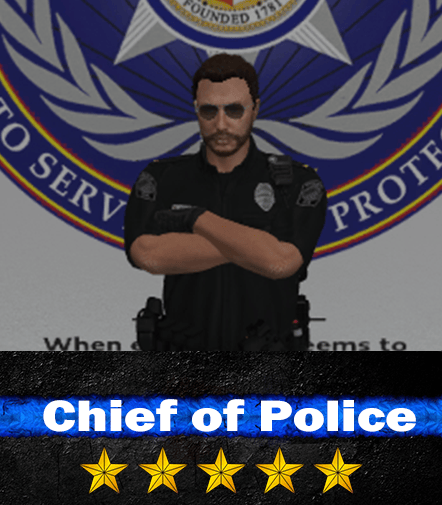
Chief of Police - Skylar Breeze
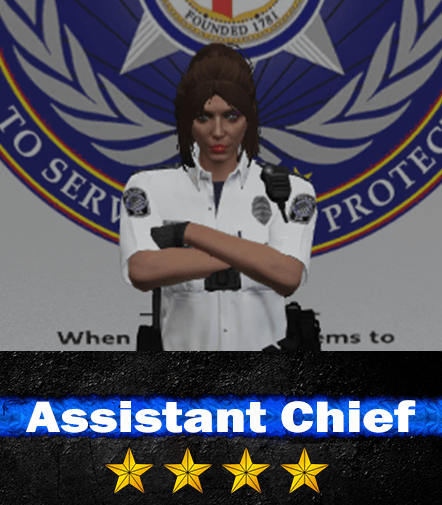
Assistant Chief of Police - Caitlyn Hall
Quality Through Continuous Improvement
We strive for the highest quality we can achieve in all aspects of our duties, we achieve this by constantly striving for improvement within ourselves and others. The Department of Public Safety is held at a higher standard for quality above all citizens.
Life Over Poverty
The life of the citizen is of the utmost importance, what this means is protecting life as much as we can while still enforcing the law (Including the life of the suspect[s].)
Code of Ethics
As a Law Enforcement Officer (LEO), I recognize that I am given special trust and confidence by the Commissioner of the DPS and the public I serve. This trust and confidence is my bond to ensure that I behave according to the highest professional principles. In furtherance of this bond, I will hereby abide by the following Code of Ethics:- I shall Ensure that in the performance of my duties, I will administer and enforce the law in accordance with the principles of the United States Constitution and all applicable laws of the State so that equal and fair protection of the public and the law, to ensure the people’s rights and the due process is guaranteed to all.
- I shall demonstrate standards of behavior in accordance with the responsibilities, duties, obligations, and commitments of all LEOs to ensure a proper example of standards is set for all to follow.
- I shall always adhere to the standards and principles of honesty and integrity, leaving my personal life unsullied or untainted as an example for all to follow.
- I shall ensure proper personal accountability and responsibility for all property and persons entrusted within my care.
- I shall practice discretion and logical judgments and decisions to aid the fulfillment of the responsibilities and duties of my position as a Police Officer.
- I shall accept all responsibilities, duties, obligations, and commitments and will hereby adhere to this Code of Ethics. In so doing, I knowingly accept personal accountability for encouraging my peers to abide by the same Code of Ethics.
All employees of the DPS are expected to:
- Strive to meet the responsibilities of their assigned job duties, to be responsible for their actions, and be accountable to their supervisors and to the citizens they serve.
- Set goals and precisely measure objectives within a time limit that supports achieving these goals.
- Know the laws and rules that will aid them in performing their duties and serving the public.
- Strive for individual improvement.
- Be able to detect problems within their job assignments and make decisions in response to those issues, such as problem-solving, crime reduction, traffic safety, and Sheriff partnerships.
- Enhance their level of technical knowledge, training, and education.
Department of Public Safety Goals
The DPS and each member will strive to:
- Provide the best in quality service to earn the highest respect and confidence from the citizens in the State of San Andreas.
- Provide public service through individual attention with empathy, integrity, and professionalism.
- Identify areas in which public safety can be enhanced.
- Be leaders in responsibility and accountability by exercising the maximum effort toward reaching the Office’s mission.
- Treat all citizens and fellow employees fairly and equitably without regard to race, gender, religion, national origin, physical or mental disability, or sexual orientation.
- Reduce crime, make roadways safe, and provide assistance to the public in the most professional manner.
- Be conscious of how they manage their resources and to focus their activities with the greatest impact on the Office’s priorities.
- Utilize the best available technology to meet the demands of its employees and the citizens that they serve.
Personnel Contact Information
- Skylar Breeze
- Caitlyn Hall
- Samuel Blackwood
(995)456-9485skylarbreeze@lspd.gov